 By Grant Mya
Progressive strength training is often reduced to adding weight to the bar. In practice, progress can mean more repetitions with the same load, better control, greater range of motion, shorter but adequate rest periods or a harder exercise variation. A suitable gym must support all of those routes without forcing the programme to change whenever the floor becomes busy.
This is why comparing the best gym Singapore options requires more than counting racks or looking for the heaviest dumbbell. The real test is whether the club provides repeatable conditions. If equipment, space and access vary too much from week to week, it becomes difficult to tell whether performance changed because of training or because the environment changed.
Progress Requires a Reliable Reference Point
A programme works by comparing today’s performance with previous work. That comparison is meaningful only when the setup is reasonably consistent.
Consider a member progressing a machine chest press. If one branch has a different model, a different starting position and a different weight-stack calibration, the number recorded in an app may not transfer cleanly. The exercise is still useful, but the load is not directly comparable.
The same problem appears with barbells, cable ratios and adjustable benches. A serious strength gym does not need identical equipment everywhere, but it should let members identify and reproduce their setup. Clear machine labels, visible adjustment numbers and consistent storage all reduce guesswork.
The Equipment Range Must Support Small Steps
Progress stalls when the next available load increase is too large. This is common with lighter dumbbells, small-muscle exercises and cable movements. Adding five kilograms to a heavy leg exercise may be manageable. The same jump can be unreasonable for a lateral raise or rehabilitation exercise.
A strength-supportive facility offers sensible increments across the full range, not only at the heavy end. Useful details include:
- small plates or fractional loading options;
- dumbbells that rise in manageable steps;
- cable stacks with usable intermediate settings;
- resistance bands that are clearly distinguishable;
- machines with adjustable starting positions.
These options allow progression without sacrificing technique merely to reach the next number.
Enough Stations Matter More Than One Showcase Rack
A gym may advertise premium lifting equipment while offering too little capacity for the number of members who need it. Progressive work depends on completing planned sets with broadly appropriate rest. A long, unpredictable queue can turn a structured session into exercise improvisation.
Duplication is especially valuable for high-demand patterns: squatting, pressing, rowing and vertical pulling. The duplicates do not have to be identical if each has a clear purpose, but members should have a reasonable alternative that preserves the training goal.
For example, a planned barbell row may be replaced with a supported machine row when time is tight, provided the member understands the change. Replacing it with an unrelated exercise simply because the free area is blocked creates programme noise.
Adjustable Equipment Expands the Progression Path
A machine with a suitable resistance curve can be excellent, but its usefulness falls if the seat, pad or handle cannot fit the member. Adjustment is not a luxury. It determines whether the target joint can move through an appropriate range while the body remains supported.
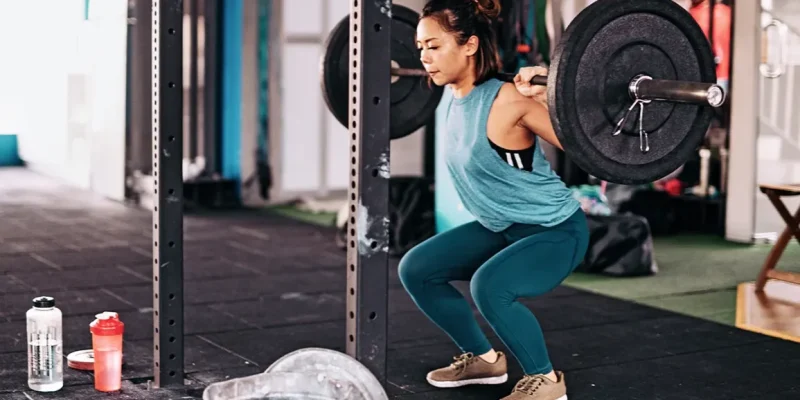
Benches should lock securely at useful angles. Cable columns should offer height options. Racks should provide enough J-hook and safety-arm positions for different bodies. For shorter members, a machine’s first adjustment must actually be reachable. For taller members, the top position must avoid forcing a cramped setup.
During a trial, test the equipment you expect to use. A complete-looking strength area may still offer only one workable station for your proportions.
Safety Hardware Enables Effort
Progressive training eventually requires challenging sets. That does not mean reckless lifting, but it does make safeties, spotter access and equipment condition important.
Racks should have appropriate safety arms or pins, and members should be able to set them without dismantling another station. Benches should be stable. Collars should be available and serviceable. Cables should run smoothly without visible damage. The floor beneath loaded work should be even and suitable for the expected impact.
Good hardware also changes confidence. A lifter who trusts the safeties can focus on the repetition. One who worries about a loose bench or missing collar may stop the set for the wrong reason.
The Gym Should Allow Technique to Be Observed
Mirrors can help with setup, but they are not a complete coaching system. Their angle may distort judgement, and turning the head to watch a lift can change the movement. A useful gym provides enough space for a trainer or training partner to observe safely from the side and front where appropriate.
Video can also support technique review, provided recording is permitted and other members’ privacy is protected. The ideal space lets a phone be positioned without occupying a walkway or placing it where equipment could strike it.
The purpose is not to film every repetition. It is to make occasional, well-framed feedback possible when a change in load, tempo or range needs checking.
Progression Also Needs Recovery Options
Strength is built during training and expressed under recovered conditions. A gym that encourages every session to become maximal may undermine consistent development.
Useful recovery support can be simple: a mobility area that remains available, cardio equipment for low-intensity work and a class schedule that includes lower-intensity options. More importantly, coaches should be able to scale a session when sleep, work stress or soreness is poor.
A mature training culture treats a reduced-load week, easier variation or shorter session as part of progression. It does not frame every adjustment as a failure of motivation.
Staff Knowledge Changes the Value of the Floor
Equipment solves only part of the problem. Members need help choosing a progression that matches their goal and training age.
A coach should be able to explain why a particular change is being made. Adding load may be appropriate when repetitions are stable and technique remains consistent. Increasing range of motion may be the better progression when control is limited. Reducing assistance may suit a pull-up. Adding a set may help volume, but only if recovery can support it.
Vague instructions such as “go heavier every week” ignore the way progress actually fluctuates. Useful coaching distinguishes a temporary low-performance day from a genuine need to change the programme.
Test the Gym Against an Eight-Week Block
Imagine using the facility for an eight-week block and ask:
- Can the main exercises be repeated at your normal training time?
- Are there small enough load increases for the movements you use?
- Can you set safety hardware correctly?
- Is there a close substitute when a station is occupied?
- Can you record setup details and reproduce them next week?
It is also worth checking access across branches if your routine changes. When evaluating True Fitness Singapore, inspect the specific club and time slot you will actually use. A brand-wide equipment list cannot show local peak-hour demand or whether your preferred rack is usually available.
A suitable strength gym makes progress measurable, repeatable and adaptable. It supplies enough load to challenge experienced members, but it also respects the small increments and stable setups that make long-term improvement possible. The best sign is not a dramatic one-repetition maximum performed on tour day. It is the confidence that next week’s planned session can happen under conditions close enough to compare.
Frequently Asked Questions
How many squat racks should a good strength gym have?
There is no useful universal number. Capacity depends on membership, peak-hour demand, session length and whether racks also support benching or other work. Visit at your normal time and observe both availability and average waiting, rather than judging the count in isolation.
Are machines useful for progressive strength training?
Yes. Machines can provide stable resistance, make some muscles easier to target and reduce setup time. Their limitations are model-specific loading, fit and transfer between clubs. Record the machine and settings, not just the weight-stack number.
Do I need fractional plates?
Not for every lift, but they are helpful when the standard jump is large relative to the load being used. They can support steadier progression in overhead pressing, upper-body isolation work and other movements where small increases are meaningful.
What should I do when my planned station is occupied?
First decide which training quality must be preserved, such as movement pattern, muscle emphasis or loading range. Choose the closest available substitute and record the change. If the same conflict happens repeatedly, revise the programme for that time slot rather than improvising every week.
Is personal training necessary for progressive strength work?
No, but competent coaching can shorten the learning process, improve exercise selection and help manage difficult plateaus. Members training independently still benefit from an initial equipment orientation and occasional technique review, especially when introducing unfamiliar loaded movements.